
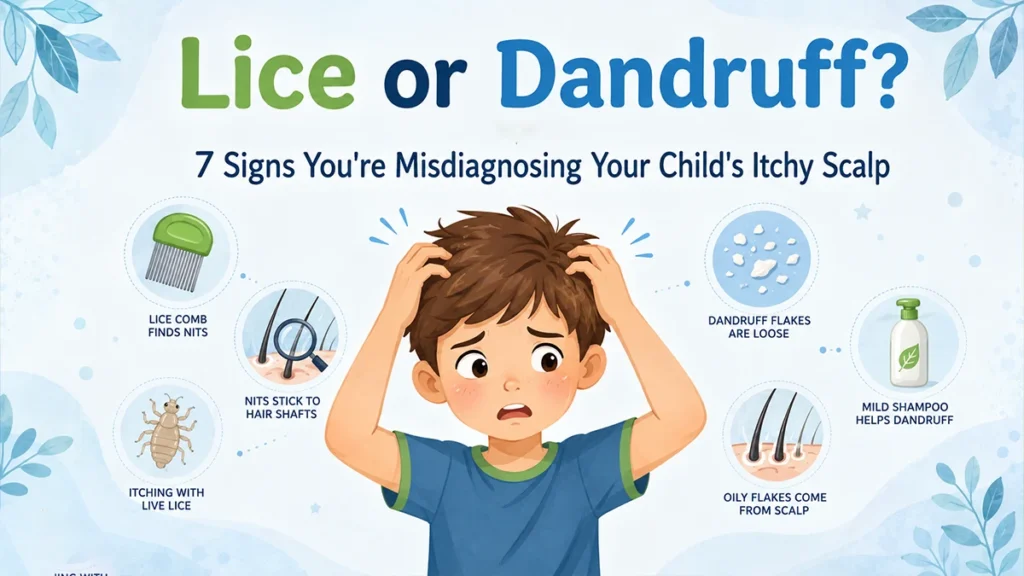
More parents than you’d think buy an anti-dandruff shampoo, use it for two weeks, and only later realise the real problem was lice all along or the opposite, and they’ve been combing frantically for “nits” that were just dry scalp flakes. Getting this wrong wastes time, and time is the one thing that works against you with lice, since a single female louse can lay several eggs a day.
Here are 7 signs to tell them apart, fast.
1. Movement
Dandruff flakes sit still. Lice and freshly hatched nymphs move. If you see something scurry when you part the hair, that’s your answer.
2. Where It Sits on the Hair Shaft
Dandruff is loose and falls off with a shake. Nits are cemented to the hair shaft, usually within half an inch of the scalp, and need to be scraped or slid off with effort.
3. Colour and Shape
Dandruff flakes are irregular, white-ish, and flat. Nits are oval, tiny (like a sesame seed), and can appear yellowish-white or brownish depending on how developed they are.
4. Where the Itch Is Concentrated
Dandruff itch is spread across the whole scalp. Lice itch tends to concentrate behind the ears and at the nape of the neck their preferred feeding zones.
5. How the Scalp Looks Underneath
Dandruff often comes with visible dryness or oiliness of the scalp itself. Lice bites can leave small red bumps, and in longer infestations, mild irritation from constant scratching.
6. Family Pattern
Dandruff doesn’t spread between people. If your child’s sibling or seatmate suddenly develops the same symptoms within days, that’s a lice pattern, not a dandruff one.
7. Response to Shampoo
If a regular anti-dandruff shampoo doesn’t reduce the itch or flaking within a week, you’re very likely dealing with something a scalp shampoo alone can’t fix.
When in Doubt, Don’t Guess Get It Screened
A five-minute professional check removes all ambiguity, and at Lice Free Salon, screening is the first step of every visit regardless of what you suspect it is.
